

Loading cart...
 My Account
 Track Order
 Sports Guide
Non-marking shoes are sports shoes with soles that do not leave black streaks or scuff marks on indoor floors. The sole is made from gum rubber or a light-coloured rubber compound instead of the carbon-black rubber used in regular shoes. Badminton, squash, table tennis and most indoor courts require them.
In Hindi: non-marking shoes kya hota hai? Aise sports shoes jinke sole se indoor court ke floor par kaala nishaan nahi padta.
Shopping for a pair? Browse our non-marking badminton shoes.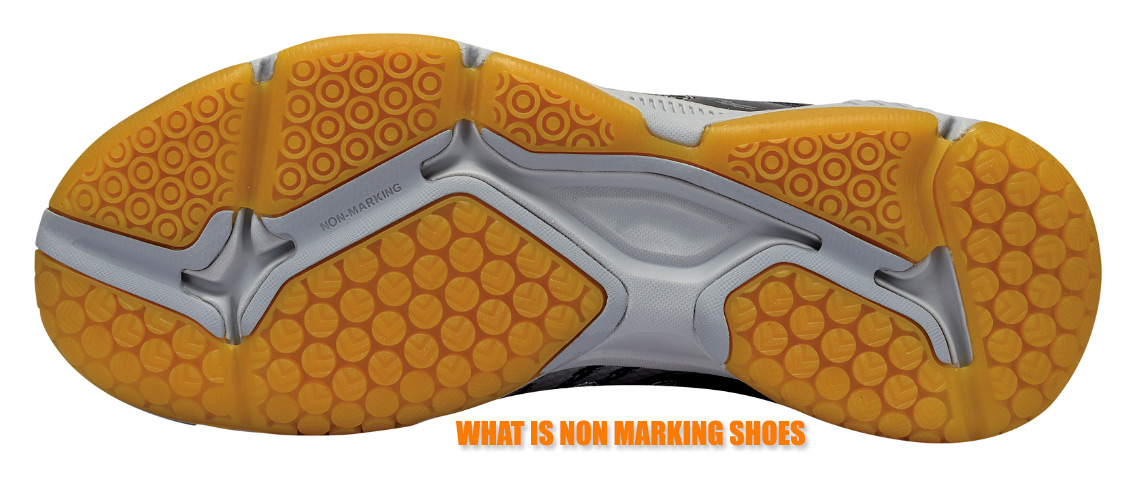
Quick answers
- Meaning: a shoe whose sole will not mark wooden, synthetic or tiled indoor floors.
- Do you need them for badminton? Yes. Most academies, clubs and indoor halls in India will not let you on court without them.
- How to check: look for "non-marking" printed on the sole, then rub the sole hard on white paper. No black line means it is non-marking.
- Other names: court shoes, indoor court shoes, non-markable shoes, no-mark shoes, and non-marking trainers in the UK.
What are non-marking shoes?
The difference is in the outsole rubber. Most everyday shoes use rubber mixed with carbon black. It makes the sole dark and hard-wearing, but it also rubs off on smooth floors and leaves dark streaks, the same way a pencil does on paper.
Non-marking soles use natural gum rubber or a rubber compound filled with silica or other light-coloured fillers. These grip a smooth indoor surface well and do not transfer colour onto it.
That is why most non-marking soles are gum-brown, white or light grey. Colour alone is not proof, though. Some brands now make dark-coloured soles with non-marking compounds, and some white soles do mark.
Non-marking vs regular shoes
| Feature | Non-marking court shoe | Regular sports or running shoe |
|---|---|---|
| Sole rubber | Gum or light-coloured, silica-filled compound | Usually carbon-black rubber |
| Marks on indoor floors | No | Often leaves black streaks |
| Grip on wooden or synthetic courts | High, built for sudden stops | Lower, can slip on dusty courts |
| Sole height | Low, keeps the foot close to the floor | Higher foam stack, especially running shoes |
| Side-to-side support | Built for lateral lunges | Built mainly for forward movement |
| Wear on concrete roads | Wears out fast | Lasts longer outdoors |
How to identify non-marking shoes
- Read the sole. Most court shoes have "non-marking" or "non marking outsole" moulded or printed on the bottom. The box and product page usually say it too.
- Check the sole colour. Gum, white or light grey is a good sign, but not a guarantee, as explained above.
- Do the paper test. Press the sole firmly on a sheet of white paper or a white tile and drag it a few centimetres. A clean surface means non-marking. A grey or black line means the shoe will mark a court.
- Check the shoe type. Shoes sold as badminton, squash, volleyball or indoor court shoes are non-marking almost every time. Running shoes and casual sneakers usually are not.
You may read about the thumbnail test, where a quick-recovering dent means a non-marking sole. It tells you how soft the rubber is, not whether it marks, so do not rely on it.
Why badminton courts insist on non-marking shoes
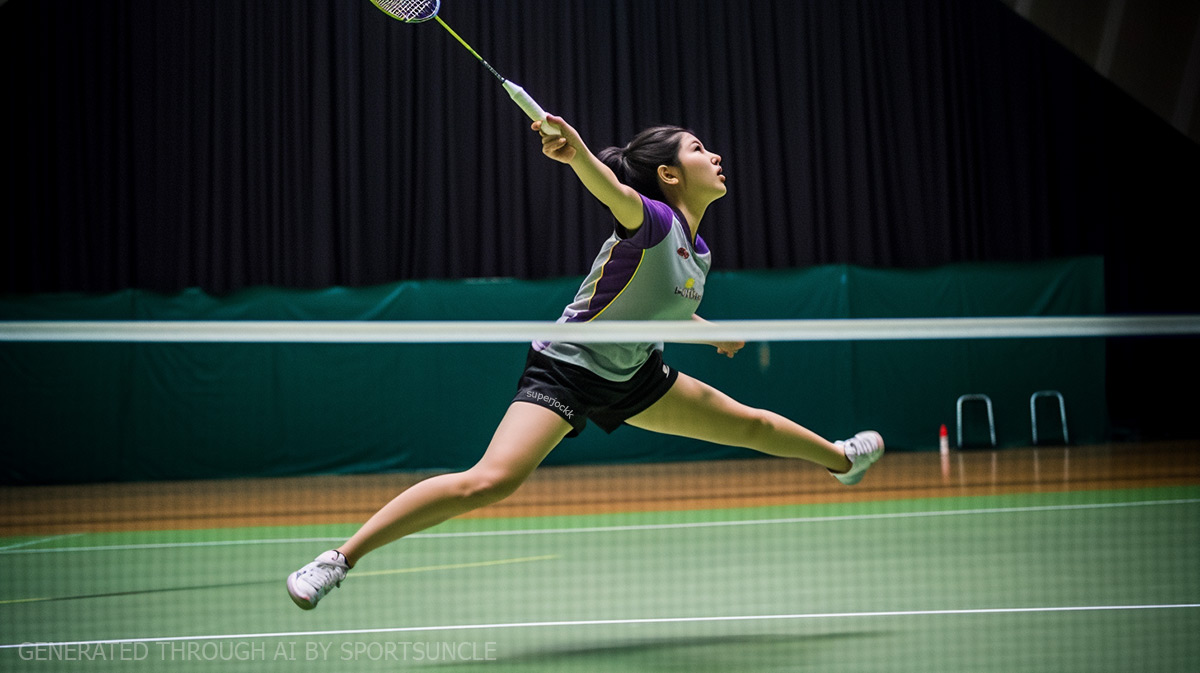
Indian badminton courts are usually wooden floors, synthetic PU or PVC mats, or mats laid over wood. International events are played on synthetic mats over a wooden floor.
Black streaks on these surfaces look bad, but the bigger problem is grip. Rubber deposits and outdoor grit make the court slippery for everyone who plays after you. That is why most academies and clubs check shoes at the door. Our guide to badminton court rules covers what else halls usually expect.
For you as a player, the grip matters even more. Badminton is full of sudden lunges and direction changes. A court shoe holds the floor during those moves, which is a big part of avoiding ankle and knee badminton injuries.
Which sports need non-marking shoes?
- Badminton
- Squash
- Table tennis
- Volleyball and indoor handball
- Indoor basketball and futsal
- Indoor tennis courts
The shoes are not interchangeable just because they are all non-marking. Each sport moves differently, so the cushioning, sole height and ankle support differ.
Can you play badminton in other non-marking shoes?
Basketball shoes for badminton: not recommended
Many basketball shoes are non-marking, so they will not damage the court. The problem is how they are built. They have thick, heavy soles for jumping and landing, and many come above the ankle.
That height puts your foot further from the floor. On a fast sideways lunge it raises the risk of rolling your ankle. You can manage a casual game in them, but for regular play buy badminton shoes. The reverse is also true: badminton shoes do not give enough cushioning for basketball landings.
Tennis shoes for badminton: only if the sole is non-marking
Tennis and badminton footwork are similar, so a light tennis shoe can work. The catch is that most tennis shoes in India are made for outdoor hard courts. They use tough, often marking, rubber with a deep herringbone pattern, and they are heavier and stiffer than badminton shoes.
Indoor or carpet-court tennis shoes with "non-marking" on the sole are fine for badminton. Outdoor hard-court pairs are not. Going the other way, badminton shoes wear out quickly on outdoor tennis courts. See our tennis shoes range if you play both.
Running shoes for badminton: No
Most running shoes are not non-marking. They also have a tall, soft foam heel built for forward running and very little side support. On a badminton court that combination slows you down and makes ankle rolls more likely.
Can non-marking shoes be used for running, walking or the gym?
- Running: not a good idea. Court shoes have thin cushioning for heel strikes, and the soft sole wears out fast on roads. Use proper running shoes.
- Walking outside: you can, but the gum sole wears down on concrete and picks up grit that later scratches the court. Keep one pair for court use only and carry it in a kit bag.
- Gym: yes, they work well for strength training and agility drills. The flat, low sole is stable under weights. They are not ideal for long treadmill runs.
Are Nike, Converse, Skechers or Reebok shoes non-marking?
It depends on the model, not the brand. Nike, Reebok, Skechers, Converse and Adidas all make some non-marking court shoes and many casual or running shoes that are not. Check the sole label or do the paper test before you take any of them onto a badminton court.
What to look for in non-marking badminton shoes
- Grip: a gum or non-marking rubber sole with a fine pattern that holds wooden and synthetic courts.
- Low sole: keeps you close to the floor for quick direction changes.
- Side support: a firm heel and a reinforced edge so the foot does not slide over the sole on lunges.
- Cushioning: enough under the heel and forefoot to absorb jumps and smashes, without making the shoe heavy.
- Fit: snug at the heel with a thumb's width at the toe. If you have flat feet, read our guide on badminton shoes for flat feet first.
Non-marking badminton shoes we stock
SportsUncle has supplied genuine badminton gear to beginners and professional players since 2016. Every pair in our non-marking badminton shoes range is a court shoe with a non-marking sole, in UK sizes 5 to 11 for men and women. A few we recommend often:
| Shoe | Price band | Good for |
|---|---|---|
| Yonex Voltrex 2 | Under ₹2,500 | Beginners and weekend players who want a Yonex court shoe at an entry price |
| Victor P9200III TD | ₹3,500 to ₹4,000 | Regular club players who want more cushioning than an entry shoe |
| Li-Ning All Round | About ₹4,000 | Players who play three or more days a week and want one shoe for everything |
| Li-Ning Halberd Strike | Under ₹5,000 | Our most-searched Li-Ning shoe, for frequent players who want firmer support |
| Adidas Court Stabil | Under ₹4,000 | Teens and juniors starting at an academy |
Want to stay under ₹2,000? Our Nivia court shoes start from ₹1,545. You can also browse by brand: Yonex, Li-Ning, Victor and Asics.
How to make non-marking shoes last
- Wear them only on court. Change into them at the hall.
- Wipe the sole with a damp cloth after play. Dust on the sole is the main reason court shoes start slipping.
- Let them air-dry away from direct sun. Heat breaks down the sole glue.
More tips are in our badminton shoes maintenance guide.
Frequently asked questions
Are non-marking shoes compulsory for badminton?
At most academies, clubs and indoor stadiums in India, yes. Even where nobody checks, regular shoes slip on court and leave marks, so you will play worse and risk injury.
What are badminton shoes called?
Badminton shoes are usually called court shoes, indoor court shoes or non-marking shoes.
Can I wear non-marking shoes outside?
Occasionally, yes. Regular outdoor use wears the soft sole down quickly and carries grit onto the court, so keep a separate pair for outdoors.
Are running shoes non-marking?
Most are not. A few road and trail models use light rubber, but running shoes are not designed for indoor courts even when they do not mark.
Do black soles always leave marks?
No. Some black or dark soles use non-marking compounds. Check for the "non-marking" label on the sole or do the white paper test.
What is the difference between marking and non-marking shoes?
Marking shoes use carbon-black rubber that rubs off as dark streaks on smooth floors. Non-marking shoes use gum or light-filled rubber that grips the floor without leaving colour behind.
How long do non-marking badminton shoes last?
If you play three or four times a week, a pair typically lasts 6 to 12 months before the grip or cushioning drops. Replace them when the sole pattern wears smooth under the forefoot or the shoe starts slipping on clean courts.
Written by Aashish Rrastogi, founder of SportsUncle. In the badminton retail trade since 2012, fitting players from beginners to state level with court shoes.
Related Products
-22%
₹8,999 ₹6,999
-20%
₹5,499 ₹4,425
-70%
₹1,099 ₹325
-64%
₹1,099 ₹395
Comments: 6
Thank you for this information, Looking forward to read more stuff like this
This is best article written on Non Marking shoes in badminton, worth a read guys.. this article is pinned by various big websites too.
I'm grateful that you provided a website with such thorough information, each point being quite apparent.
Thank You for Sharing such information.
I want to know lf basketball shoes do not have the word "non-marking" on the sloes, can they be use on the badminton court?
Dear Mr Saini,
That was a excellent article about the non marking shoes, as I am aware that there are gum sole non mrk shoes and synthetic rubber coloured non mrk shoes. However in my opinion the synthetic non mrk shoes leave scruffs on the squash courts(wodden) as against the gum sole ones.
I would like you to shed some clarity on this further.
Though our courts specify that we must use gum sole shoes, there is a lot of discussion generated on this matter in our courts and no one really knows what is correct.
Thank you.
Leave a Reply
Your email address cannot be published. Required fields are marked*
Latest Articles from Blog