

Loading cart...
 My Account
 Track Order
 Sports Guide
Without a doubt, Cricket has become a batsman’s game, if it was not earlier, particularly after the introduction of T-20 cricket. Plus, the evolution of cricket bats has further enhanced the batting prowess. In modern game, bat design has shifted to prioritise power and distance, with features such as larger edges and higher spines to accommodate aggressive batting styles. As a result, we see boundaries being cleared with such ease. We could easily see more sixes being hit in a match than the number of boundaries. However, it doesn’t mean that just picking a bat is enough to hit sixes.
On the contrary, several other factors have enabled modern Batman to clear boundaries at will. One such factor is the weight of the cricket bat, which is available in a range of weights from lightweight to heavyweight. The ability to generate power is a key reason why players carefully consider bat weight, as the right weight helps maximise power output during shots. So, you have to find a weight that is perfect for you.
Weight is a crucial factor when selecting a cricket bat, as it directly impacts your batting style and overall performance. Finding the perfect weight cricket bat is essential for every cricketer, whether a professional or an amateur one. After all, the weight directly affects the style of your batting. However, it is worth noting that there is no perfect weight; it depends on individual preferences. In other words, choose the weight that feels right to you. What’s more, heavyweight cricket bats and lightweight cricket bats have their advantages and disadvantages.
Therefore, we have brought you some critical aspects of both types of bats in this piece to help you find the right one.
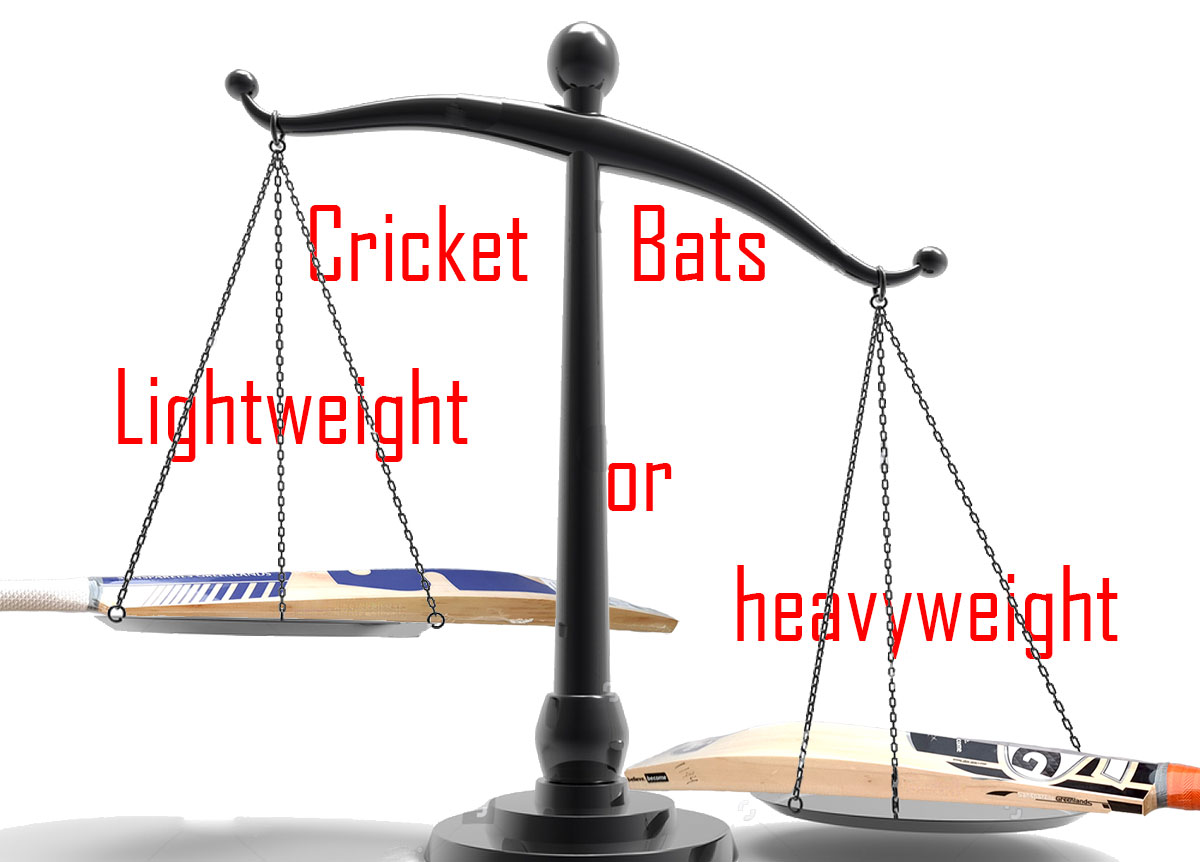
Introduction to Cricket Bats
A cricket bat is more than just a piece of equipment—it’s the heart of a batter’s game. Whether you’re playing a casual match with friends or stepping onto the field for a competitive game, the right cricket bat can make all the difference. A good cricket bat offers better control, power, and style, allowing you to hit the cricket ball with confidence and precision. Choosing the right cricket bat is a personal decision, influenced by factors like cricket bat size, weight, and the type of willow used. English willow bats and Kashmir willow bats are the two main types available, each offering unique benefits. English willow bats are often favoured for their performance in professional cricket, while Kashmir willow bats are popular for their durability and affordability. No matter your level of experience, understanding these differences will help you find the perfect bat to match your playing style and personal preference, ensuring you get the most out of every game.
Cricket Bat Materials
The material of a cricket bat plays a crucial role in its performance and feel. Most cricket bats are crafted from cricket bat willow, a special type of willow tree known as Salix alba var. caerulea. This wood is prized for its combination of strength, lightness, and shock-absorbing qualities, making it ideal for withstanding the impact of a fast-moving cricket ball. English willow bats are renowned for their superior quality, offering excellent performance and a lighter pick-up, which is why they are the top choice for many professional and international players. On the other hand, Kashmir willow bats are made from willow grown in the Kashmir region. These bats tend to be heavier and more robust, making them a great option for junior players or those seeking a good cricket bat at a lower price point.
Handcrafted cricket bats, such as those produced by brands like Kookaburra, are highly valued for their attention to detail and quality craftsmanship. The willow blade of each bat is carefully shaped and treated with raw linseed oil to enhance its durability and performance. A well-made bat will also feature a comfortable rubber grip on the handle, ensuring better control and a secure hold during play. Whether you choose an English willow or Kashmir willow bat, selecting a bat made from high-quality wood and with a good grip will help you achieve excellent performance on the field.
Types of cricket balls and which to use for practice vs match
Lightweight Bats
Let's start our discussion by talking about some benefits of using lighter-weight bats.
Advantages of light weight bat
1. Best for developing technique
Lite bats are perfect for beginners who are looking to better their batting technique. It is easier to concentrate on playing your shots with a lightweight cricket bat instead of being bogged down by its weight. Hence, it helps people become good batsmen as they can swing the bat more freely.
Note: For players transitioning from junior to adult-sized bats, it is recommended to use a lighter bat. Doesn't matter which handle you choose round or oval.
2. Better Shot Selection
Lighter bats give more freedom to the batsman to play a wide range of shots. Additionally, it enhances the speed of bat movement, resulting in good timing. On top of that, lighter bats empower a batsman to free his hands with better control, which might not be the case with a heavy bat. As heavyweight limits the amount of moment due to weight constrain.
3 . Developing New Shots
As the game evolves and tennis ball cricket gains popularity at competitive levels, strategies are centred on scoring the most runs in 5-10 overs. So the importance of your bat’s weight comes into play. Batsmen can play innovative shots like switch hit and dilscoop that require greater bat control and switching one’s grip with lighter bats. Players who love to play cricket in a fun and creative way often prefer lighter bats for their versatility. A more lightweight bat is more suitable for this cause.
Like to mention English willow cricket bat is lighter than Kashmir Willow wood. English Willow cricket bats are used in the professional or international cricket. In Gully cricket mostly tennis cricket bats used which is made of popular willow.
4. Prevents Long-term Injury
Heavier bats are more suited to playing bigger shots, and a great example of this was the game's little master blaster, Sachin Tendulkar. But with great power, there is a con also, use of heavy bats for extended periods, say for one's whole career, can significantly increase the chance of injury.
The batsman should pick bats as per your own comfort level, but that's not possible with online buying. You can see the grains and some fake ping videos that can be easily manipulated by giving extra power while hitting. So, a good seller with good knowledge of handpick bats is necessary for such conditions.
5. Batting Aggressively
The choice of cricket bat also depends on the format of the game. Some players use lighter bats for the fast-paced 2020 format, but some players use heavy cricket bats for hitting big sixes in the same format. Lightweight bats also allow players to change their stance and play unorthodox shots to gain the edge over their opponents.
Enough with the advantages of using a lighter bat, let's talk about the disadvantages of using such bats.
Disadvantages of Lightweight
Here is the flip side of using lighter bats.
1. Less power
The most significant disadvantage of using a lighter bat is that bat usually means less power than heavyweight bats. You might not get enough distance on your shots, and you will have to generate move power from your wrist to hit the cricket ball over the boundary, even if the balls hit the middle of your bat.
2. Not optimum for end overs
The batsman at the end overs tries to score as many runs as possible. In the process, they aim to hit as many boundaries, specifically sixes, as possible. However, in the case of lite bats, it is mandatory to absolutely crunch the ball. Otherwise, you might end up giving up a catch to a fielder.
That's why the great Rahul Dravid used to switch to a heavier bat towards the innings' end.
Also Read: Maintenance of a cricket bat
Shop Lightweight cricket bats on sportsuncle
Superjockk BDM Cricket bats are the best value for money cricket bats, if you are looking for AAA Grade.
Heavyweight bats
Advantages of Heavyweight bats
1. More power
The most significant advantage of using a heavyweight bat is that it offers you more power than a lighter bat. More power means more distance on the shots, even if you don't hit the ball in the middle of the bat. In other words, heavy bats are perfectly suited for power hitting and clearing boundaries effortlessly.
2. Broad edges
Another benefit of using heavy bats is that it has broad edges. Brands like Kookaburra bats are renowned for their thick edges and large sweet spots, enhancing performance. What’s more, the edges are so broad that even the edges have their own sweet spot, and when a fast-moving ball hits these broad edges, it usually flies, which is generally not the case with lite bats.
3. Best for shorter formats and end overs
Usually, in shorter formats, batsmen look to hit boundaries; the same is the case with the last few overs of a one-day match. As a matter of fact, batsmen are not content with just hitting fours; they want to hit sixes and that too long sixes in shorter formats.
And it is no surprise that hitting sixes is more effortless with heavy cricket bats, so these bats are perfectly suited for shorter format and end overs.
Also Read: Beast Mode-how modern cricket bats enabled power hitting
Disadvantages of Heavy Weight
1. Makes you prone to injury
Just like lite bats, heavyweight bats have their disadvantages too. Taller players often choose heavier or longer bats for better reach and leverage, but must be cautious about injury risk due to the increased weight. The first of which is, it can tire your wrist quickly and make you prone to injuries, particularly in longer formats like test cricket and even in one-day Cricket. That’s why, batsman tend to change their bats to a heavy one at the end of innings instead of starting with a heavy bat.
2. Limits the number of shots
The second most significant drawback of using a heavy bat is, it limits the number of shots. Some players use a long handle bat to improve reach and leverage, even when using a heavier bat. For instance, a heavy bat makes it challenging to play strokes like pull and cut because it is difficult to swing a heavy bat, and shots like these need to have a free bat swing.
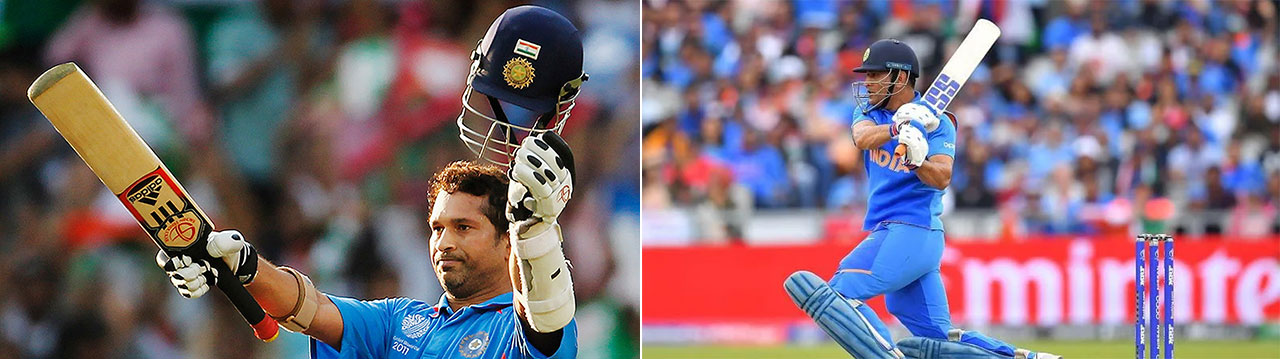
Browse heavyweight cricket bats - all sizes and price ranges
List of famous cricketers with their respective bat weights
Professional players typically use full-size bats; however, different-sized bats are available to suit players of all ages and heights. For younger players, junior bats are designed to be lighter and easier to handle, helping them develop proper technique.
For adult players, the short handle is the standard size bat, ideal for those above 1.68 meters in height, as it balances size, weight, and power. Choosing the right size bat, whether a junior bat or a short-handled bat, is crucial for both comfort and performance.
We always have a question in mind: what’s the weight of Dhoni’s bat, how heavy is Virat Kohli’s bat, how much does Chris Gayle’s bat weigh?
Here is the list of some of the most famous cricketer with their cricket bat weight, which will answer all your questions:
| Cricketer's Name | Heavy or Lite | Bat Weight |
| Sachin Tendulkar | Heavy | 1.47kg |
| Mahendra Singh Dhoni | Lite | 1.25kg |
| Chris Gayle | Heavy | 1.36kg |
| Virender Sehwag | Heavy | 1.35kg |
| Kane Williamson | Lite | 1.12kg |
| Lance Klusener | Heavy | 1.53kg |
| AB de Villiers | Lite | 1.19kg |
| Virat Kohli | Lite | 1.22kg |
| David Warner | Lite | 1.22kg |
Note: The bat used by Lance Klusener is the heaviest bat ever used by a cricketer, while the bat used by Kane Williamson is the lightest bat among cricketers.
Currently, 2026 is going on; if you go back 5-6 years, Dhoni was using a similar weight to what Sachin was using, as confirmed by SG MD Paras Juny Anand.
Cricket shoes for men - get the right grip at the crease
Is it better to use a heavy or light bat?
Selecting a heavyweight or a lightweight cricket bat depends on a lot of factors. Among them, your height, your strength, your style of play, whether you are a front foot player or a back-foot player are some of the most important ones.
Good quality bats are made from premium willow with straight grains, which are indicators of performance and durability.
Hence, it is better to self-analyze your strength and the type of player you are before picking up a bat.
In case if you are lean and love to play all kinds of shots, including the innovative ones like Dilscoop, you should buy a lightweight bat. As it offers your more control over your technique, at the same time, it also lets your play reverse shots, pulls and cuts well. Plus, it is easier to control your shot better with a lightweight bat when compared to heavy bats.
On the other hand, if you have good technique, a healthy physique, and you like to play down the ground, you should go for a heavy bat. Heavy bats make sure that your bats come straight through the line while swinging.
However, keep in mind that you will lose your shape while playing a shot if you are not physically strong. Or your bat might not come in time to play a shot; the batsman needs to spot the ball a fraction of a second early to bring the heavy blade down in time.
Players tend to start a career with a heavier bat and then reduce the weight with time owing to changes in the reflexes and techniques brought about by age.
Here is a quick way to find the right bat weight.
Go into a shop, pick up a bat, and hold it perpendicularly to your body with your arm stretched for a minute. If you can perform the activity described above smoothly, the bat is right for you.
On the other hand, if you couldn’t do it, the bat is probably not meant for you. Nevertheless, keep doing the previously mentioned exercise with different bats and find the bat that suits you better.
According to the Laws of Cricket, bats must meet precise specifications to be legal for play. Appendix B of the Laws of Cricket outlines more precise specifications, including the maximum length of 38 inches and the maximum width of 4.25 inches for a cricket bat. These standards are enforced to ensure fairness and consistency in the game. Only a wooden bat is permitted in official matches, so when selecting a new cricket bat, make sure it meets these legal requirements.
On the Sportsuncle website, you will get lots of offers on the full-size cricket bat with good pickup and punch with a clean face. We have lots of cricket bat brands like MRF, Gray Nicolls, SG, SS, BDM, etc. What are you waiting for?
Find the right cricket bat for your game - shop the full range at Sportsuncle
Also Read: Selecting right cricket gloves and how to take care

Viswanath M
Meet the maestro behind the cricketing quill – a wordsmith whose ink flows with the rhythm of a perfectly timed cover drive. When the cricket ball rests, my pen takes the spotlight, transforming every match, every player, into a poetic symphony of leather against willow. With a laptop as my crease and words as my bouncers, I bowl over readers with stories that swing and spin.
Comments: 5
Great advise thanks its really helpful
Clive Hubert Lloyd used a Duncan Fearnley bat weighing 4lbs / 1.8kg. When I visited their factory in Worcester in 1983 to buy a bat the bat maker told me this and let me hold a bat of that weight. The bat I bought weighed 3.5lbs
Very helpful guide right there!
Regards,
Sports Benches
I sincerely appreciate you imparting valuable expertise on this topic to us.
Thanks. Very useful article. I think I can relate to the points.
Leave a Reply
Your email address cannot be published. Required fields are marked*
Latest Articles from Blog