

Loading cart...
 My Account
 Track Order
 Sports Guide
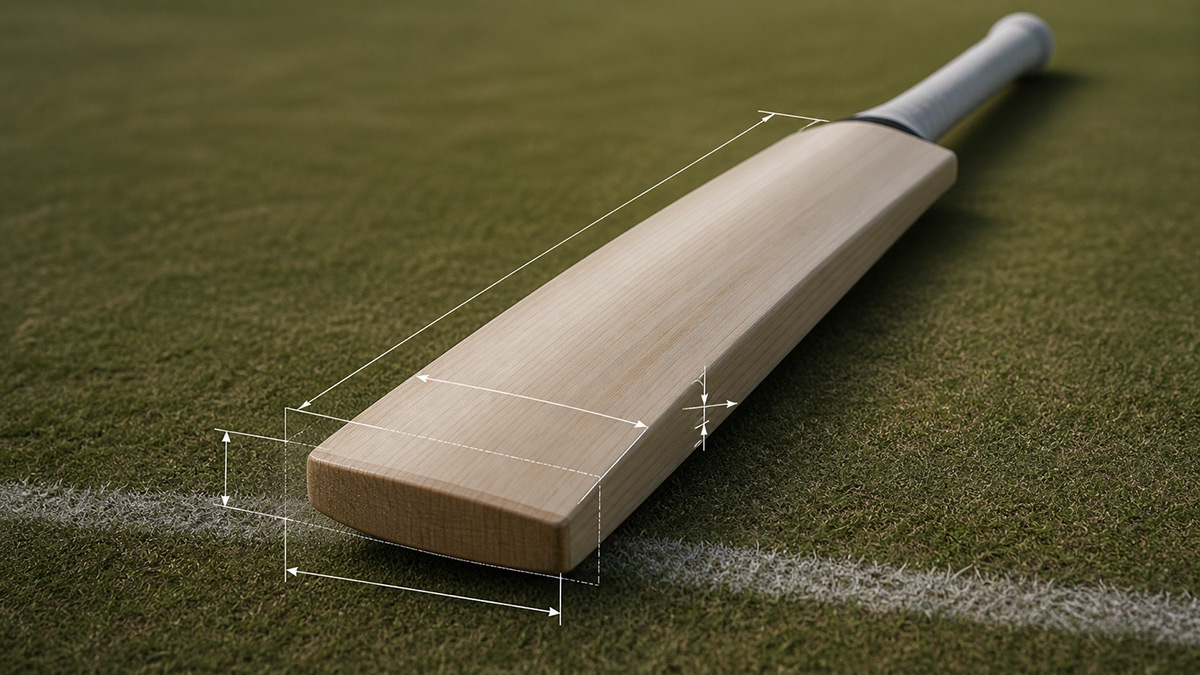
Short answer: A cricket bat is "illegal" in international cricket the moment it fails to pass through the umpire's bat gauge. Under Law 5 of the MCC Laws of Cricket, the maximum legal dimensions are 96.52 cm length, 10.8 cm width, 6.7 cm depth and 4.0 cm edges. Anything bigger than that — taller, wider, deeper, or with thicker edges — is not allowed in any professional match, even if it looks identical to a normal bat from the boundary line.
The phrase "illegal bat" gets thrown around a lot in modern cricket, especially since the IPL began checking bat sizes during live matches in 2025. But what does it actually mean? What are the exact limits, why do they exist, and how is your own bat checked? This guide breaks it down in plain English.
What Makes a Cricket Bat Illegal? (The Direct Answer)
A cricket bat becomes illegal when it breaches any one of the four physical limits in Law 5 of the MCC Laws of Cricket. These limits are tested using a simple plastic instrument called the bat gauge. If the bat — including any tape, scuff sheet or toe guard — cannot slide cleanly through the gauge, it is not allowed in the match.
The 4 legal limits every bat must pass
| Dimension | Maximum Allowed | Equivalent |
|---|---|---|
| Overall length | 96.52 cm | 38 inches |
| Width (widest part of blade) | 10.8 cm | 4.25 inches |
| Overall depth (thickness) | 6.7 cm | 2.64 inches |
| Edge thickness | 4.0 cm | 1.56 inches |
These four numbers came into force in October 2017 after the MCC concluded that bat edges had been quietly inflating from around 18 mm in the 1980s to 35–60 mm by the mid-2010s, tilting the contest unfairly toward the batter.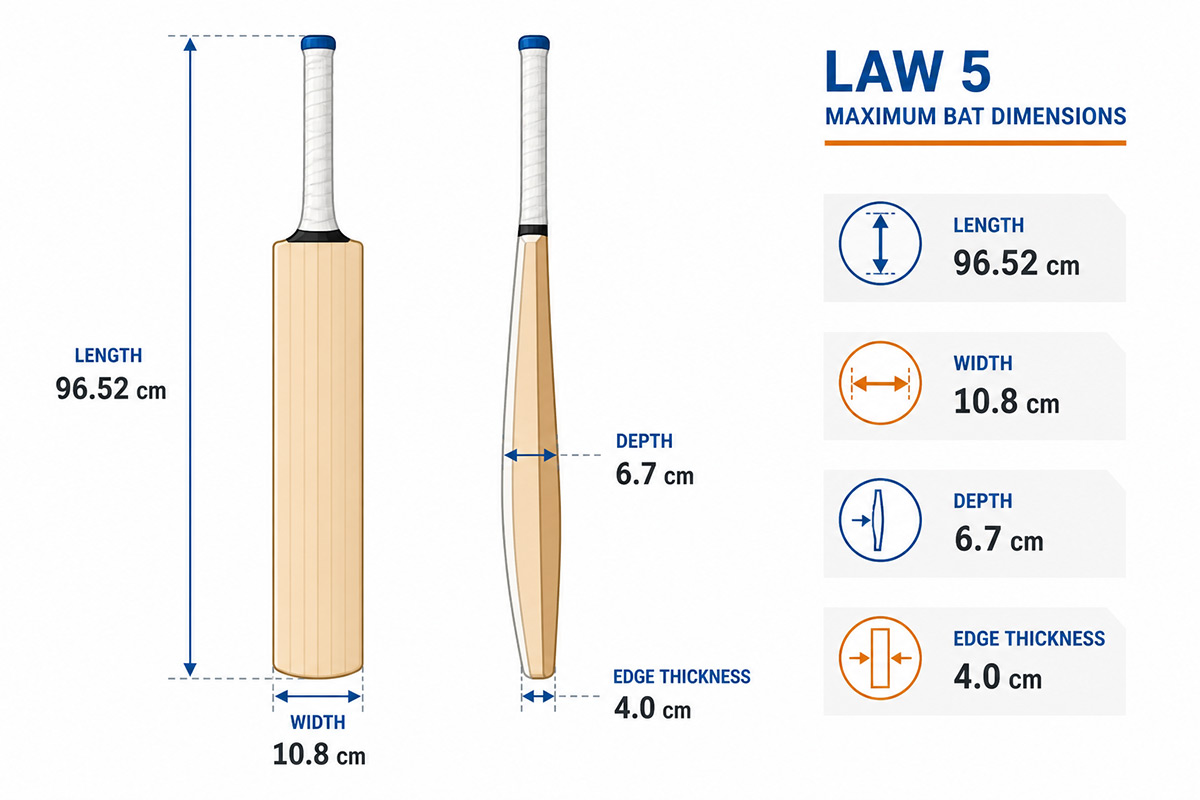
The 3 Ways a Bat Becomes Illegal
Bats can break Law 5 in three different ways. Each one provides a different — and unfair — advantage:
- Too Wide — The blade exceeds 10.8 cm at its widest point. A wider face means more middle, fewer mishits, and a much bigger margin of error on contact.
- Too Tall — The bat exceeds 96.52 cm in overall length. Extra reach helps drive yorkers and stretches the hitting zone forward, especially against full-length deliveries.
- Too Deep / Thick-Edged — Either the spine exceeds 6.7 cm or the edges exceed 4.0 cm. This is where the real "free" power comes from, because a thicker willow behind the ball returns more energy on impact and converts mishits into boundaries.
Combinations are common too. A bat that is just 1 mm over on width might still pass the eye test, but stack a thicker spine on top of that, and the advantage becomes meaningful. The gauge catches all of it.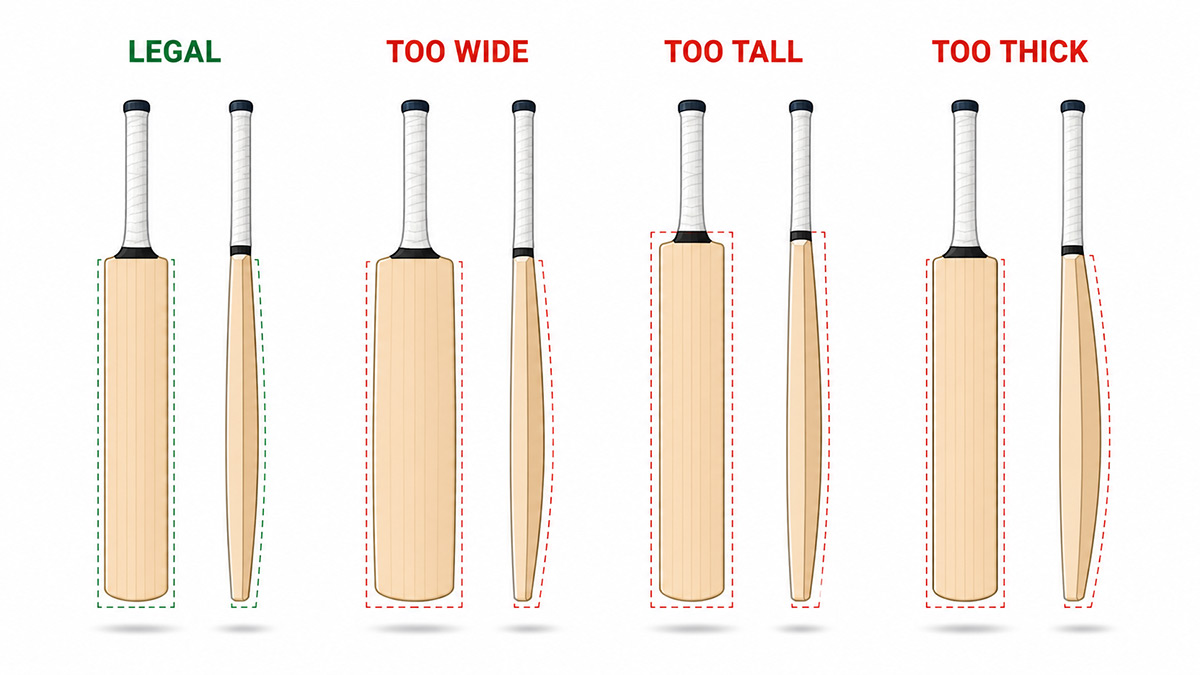
The Bat Gauge: How Umpires Actually Check
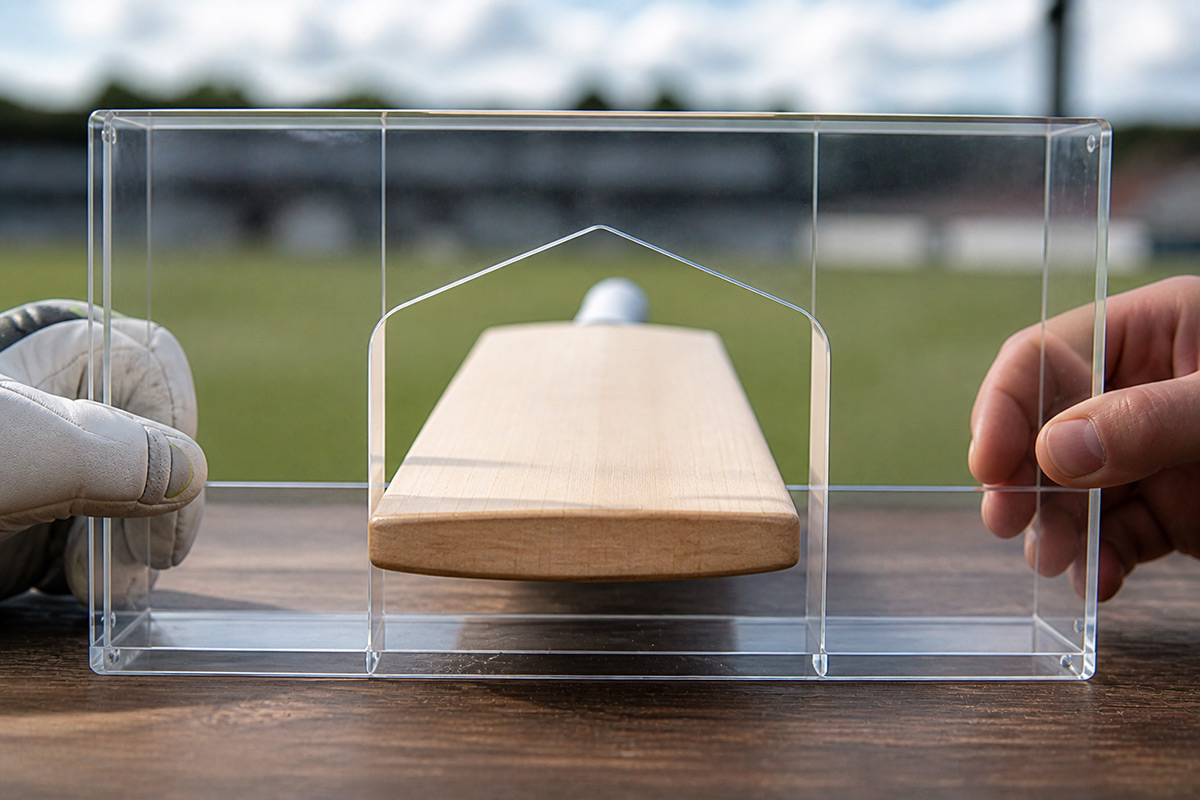
The bat gauge is a flat, rectangular plastic block with a house-shaped cut-out the exact size of a legal bat. The umpire (or fourth official) inserts the bottom of the bat into the gauge. If it passes through cleanly, the bat is legal. If it sticks at any edge, the player must replace it before the next ball.
The gauge was officially adopted by the IPL in April 2025. Before that, bats were checked the day before a match on a random sample of players — a system that left obvious gaps. Now bats are tested live, in the middle, in front of TV cameras. This is why you sometimes see umpires asking a batter to swap bats during an innings.
Why the Limits Exist: A Quick History
Bat regulation isn't new — it dates back to 1771, when a player named Thomas White famously walked out with a bat as wide as the wicket itself. The width was capped at 4.25 inches in 1774, and that number has never changed. What changed were depth and edge thickness, which had no formal cap for centuries.
Modern T20 cricket exposed the loophole. Manufacturers began carving out heavier spines and thicker edges from lighter, drier willow — players got the same pickup weight but with significantly more wood behind the ball. Senior figures in the game publicly argued that the balance had tilted too far and that mishits were going for six. The MCC agreed, and the 2017 limits followed.
Bat edge thickness: then vs now
| Era | Typical Edge Thickness |
|---|---|
| 1905 | ~16 mm |
| 1980 | ~18 mm |
| Mid-2010s | 35–60 mm |
| Post-2017 (legal limit) | 40 mm maximum |
What Happens if You Use an Illegal Bat?
In professional cricket, the consequences are immediate and embarrassing rather than catastrophic. The umpire orders the bat off the field, the player picks a replacement from the dressing room, and play resumes. There is no automatic ban or fine in the Law itself — but in tournaments like the IPL, repeated offences can lead to disciplinary action under the playing conditions.
For amateur and club cricket in India, the same Law applies in principle, but enforcement is patchy. Most local league umpires don't carry a gauge. That said, every reputable manufacturer in India already builds within the legal envelope, so unless you have specifically asked a custom bat-maker for an oversized blade, your bat is almost certainly compliant.
Bat Categories: Type A, B, C and D
Beyond the size limits, the MCC also classifies bats into four categories based on construction and intended use:
- Type A — Full compliance with all Law 5 requirements. Usable at every level of cricket, from village matches to international Tests.
- Type B — Compliant but with minor construction differences. Permitted at levels determined by national governing bodies.
- Type C — Similar to Type B, with further restrictions on use in top-level cricket.
- Type D — Junior bats only. May use laminated wood and lower-grade materials. Not allowed in adult competitive cricket.
For Indian players, this matters most when buying junior bats: a Type D bat is fine for a school match but will not be allowed in adult league cricket, even if it physically passes the gauge.
How to Tell if Your Bat Is Legal
You don't need a gauge to do a quick self-check at home. Use a tape measure on these four points:
- Length — From the top of the handle to the toe, under 96.5 cm.
- Width — At the widest point of the blade, under 10.8 cm.
- Edge — The thickness of the side of the blade, under 4 cm.
- Depth — From the face to the back of the spine, under 6.7 cm.
If you're shopping for a new bat, all genuine English willow and Kashmir willow cricket bats on SportsUncle are made within the legal Law 5 dimensions by the manufacturer. The bigger question for most players is not whether the bat is legal — it's whether it's the right size, weight and willow grade for your game.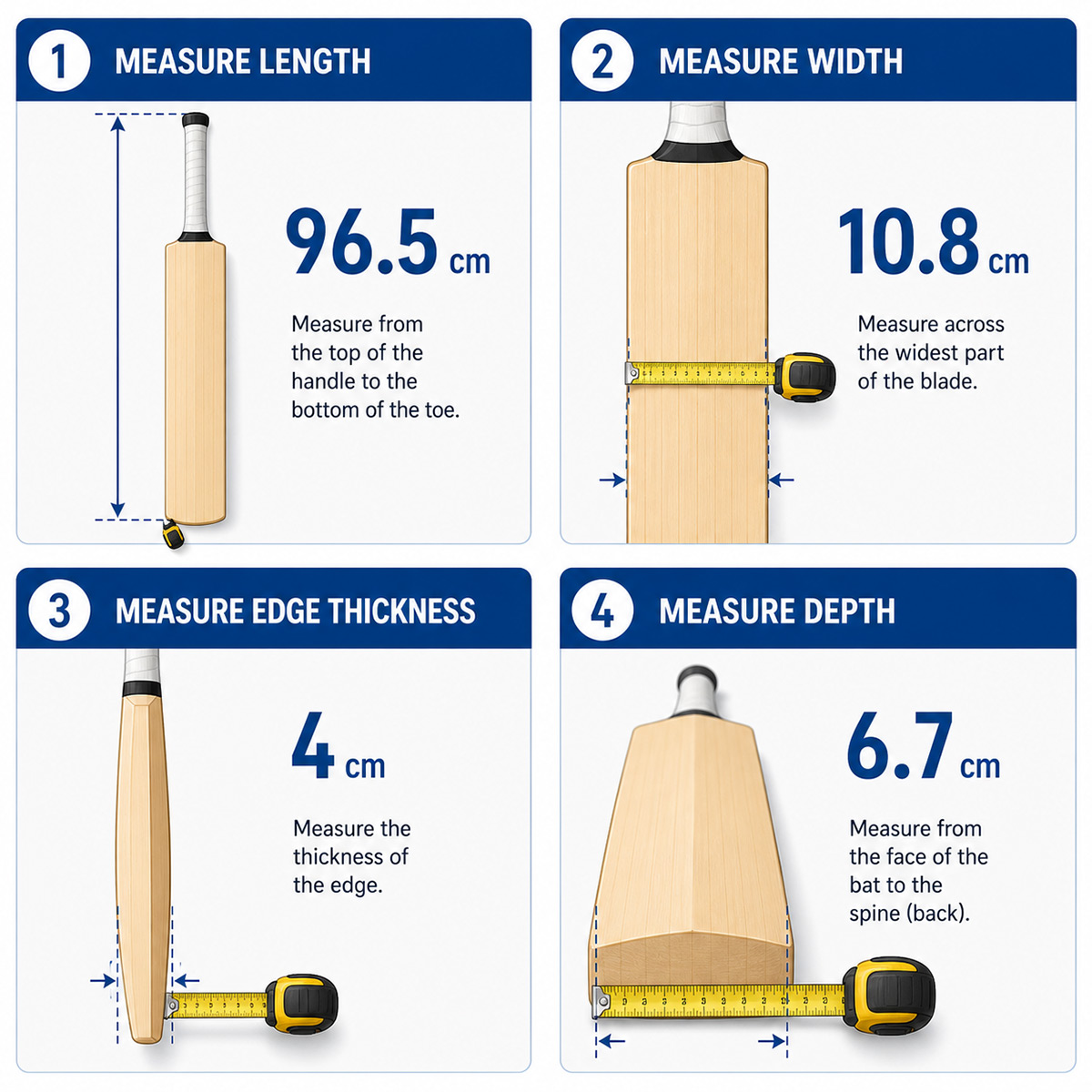
Does a Legal Bat Mean Less Power?
No. The legal limits leave plenty of room for genuinely big-hitting bats. What changed in 2017 is that the marginal benefit of going oversized was capped — players now compete on willow quality, profile shape, sweet spot placement, and pickup, rather than on raw size.
This is exactly why grain structure and willow grade matter so much in modern bats. A Grade 1 English willow bat with 8–12 straight grains will outperform an oversized lower-grade bat almost every time, because dense, well-pressed willow returns energy faster on impact. The choice between a lightweight or heavyweight bat matters far more than chasing extra millimetres.
What About Tape, Scuff Sheets and Toe Guards?
Law 5 allows protective coverings on the blade — but with strict thickness limits:
- Blade cover (scuff sheet, anti-scuff) — maximum 0.1 cm (1 mm) thick
- Toe guard — maximum 0.3 cm (3 mm) thick
The total thickness, including any tape, must still allow the bat to pass through the gauge. This is a common reason older bats fail the test: a bat that was originally legal can become illegal once a thick scuff sheet is added to an already-deep face.
Bottom Line
Law 5 exists for one reason: to keep the contest between bat and ball roughly balanced. The four numbers — 96.52 cm, 10.8 cm, 6.7 cm and 4.0 cm — are the line that separates fair power from unfair advantage. Every legitimate manufacturer builds within those limits, every professional umpire now carries a gauge, and every serious player should know the rules that govern their most important piece of equipment.
If you're putting together a new kit this season, start with a legally-sized bat that fits your game, then build the rest of the kit around it. Our guide to complete cricket kit essentials covers everything from bat to helmet to shoes, and our cricket bat maintenance guide will keep that bat hitting at peak performance for years.
FAQ: Illegal Bats in Cricket
What is the maximum legal bat size in international cricket?
Length 96.52 cm (38 in), width 10.8 cm (4.25 in), depth 6.7 cm (2.64 in), and edges 4.0 cm (1.56 in). These are the upper limits set by Law 5 of the MCC Laws of Cricket.
When did the current bat-size rules come into effect?
October 2017. The MCC introduced the depth and edge limits to restore the balance between bat and ball. The 4.25-inch width limit has been in place since 1774.
What is a bat gauge?
A plastic block with a house-shaped cut-out matching the maximum legal bat dimensions. If a bat passes through the gauge cleanly, it is legal. The IPL began using it during live matches in April 2025.
What are the three ways a bat can be illegal?
Too wide (over 10.8 cm), too tall (over 96.52 cm), or too thick — either in spine depth (over 6.7 cm) or edges (over 4 cm). A bat that fails on any one of these counts will fail the gauge.
Are oversized bats banned in club cricket, too?
Law 5 applies to all cricket in principle, but enforcement at club level is rare because most local umpires don't carry a gauge. In practice, almost every bat sold by a reputable Indian manufacturer is already within the legal envelope.
What happens if a player uses an illegal bat in the IPL?
The umpire orders the bat off the field and the batter must use a replacement. No runs are deducted for the offence itself, but repeated breaches can attract disciplinary action under tournament playing conditions.
Does an oversized bat actually hit the ball further?
Yes — modestly. The real advantage shows up on mishits, where extra wood behind the ball converts edges and inside-edges into boundaries that would otherwise be caught. This is the core reason Law 5 was tightened.
Is English willow always legal?
The willow itself is fine — only the dimensions of the finished bat matter. Both English willow and Kashmir willow bats are legal as long as they pass the gauge.
Can a scuff sheet make a legal bat illegal?
Yes. The bat gauge is applied with the scuff sheet and toe guard already fitted. Adding a thick anti-scuff to an already-deep bat can push it past the 6.7 cm depth limit, even if the willow itself is within spec.
How do I check if my own bat is legal?
Use a tape measure: length under 96.5 cm, width under 10.8 cm, edge under 4 cm, depth under 6.7 cm. If all four pass, your bat is legal under Law 5.

Viswanath M
Meet the maestro behind the cricketing quill – a wordsmith whose ink flows with the rhythm of a perfectly timed cover drive. When the cricket ball rests, my pen takes the spotlight, transforming every match, every player, into a poetic symphony of leather against willow. With a laptop as my crease and words as my bouncers, I bowl over readers with stories that swing and spin.
Related Products
-47%

₹1,999 ₹1,050
-56%
₹6,750 ₹2,995
-71%
₹1,299 ₹375
-24%
₹5,849 ₹4,445
Leave a Reply
Your email address cannot be published. Required fields are marked*
Latest Articles from Blog
07.09.2026
23.08.2026
No comments