

Loading cart...
 My Account
 Track Order
 Sports Guide
Cricket is not just a sport in India, it is a religion and cricketers are often referred to as god. Everybody in India whether, a girl or a boy, interested in cricket or not, knows about the game. That’s why it is not surprising, every child in India dreams about becoming a cricketer when they grow up. Moreover, Indian parent’s focus has shifted more towards sports than books in the last few years, especially after the introduction of the Indian Premier League (IPL).
As a result, the competition has grown tenfold, and becoming a professional cricketer has become a fiendishly tricky task- it requires extreme dedication, passion, and mental toughness. One has to put in extra hard work and do everything right, which starts with picking the perfect bat, selecting the right gloves with a good grip, settling upon the proper shoes, opting for an ideal helmet, and taking good care of them.
Considering the price of cricket equipment, including gloves, is also crucial to ensuring you stay within your budget and get 100% Original Quality products. Comfort is another key factor to consider when choosing your cricket gear.
Special attention needs to be paid while buying gloves, both batting and keeping, merely because you don’t want a 140kph ball to hit your hands.
Choosing cricket gloves might sound like a child’s play, but it is nothing like that, as there are so many options available. Hence, to make things easier for you, we have bought a detailed guide to select the perfect pair of gloves.
How do you select the perfect Batting gloves?
Choose a brand
More often than not, we go for brands that our favourite player uses. However, there is no difference in terms of comfort and protection among top brands these days. For example, DSC is known for its craftsmanship and durable batting gloves, making it a reliable choice. Hence, manufacturers are less critical because they all offer the same quality, so choose any branded company (not any local company) and stick to the following steps. You will have the perfect batting gloves.
Right or Left Handed
Determining your preferred side and selecting gloves accordingly is the first real step in buying the perfect gear. People often get confused and purchase the wrong gloves.
Usually, gloves are labelled RH for the right-hand batsman and LH for the left-hand batsman. Alternatively, you can check for the big thumb; it will be on the right-hand side for right-handers, while it will be on the left-hand side for left-handers.
Find the right size
Imagine wearing gloves that are too small, then trying to grip the bat, and playing a bunch of shots, nightmare, right? Likewise, wearing gloves that are too big will also be like a bad dream come true.
Hence, size is the most critical thing to keep in mind while picking a new pair of batting gloves. Oversized or undersized gloves will make you uncomfortable while batting, making it difficult to concentrate. And batting is all about concentration.
Hence, check out the table below before buying new gloves to understand what size gloves would be right for you.
Category | Glove Size |
Small Junior | 16.5 cm |
Junior | 17.5 cm |
Youth | 19 cm |
Adult | 21 cm |
Large Adult | 22.5 cm |
Remember, measure the length of your hand from the wrist to the top of the middle finger.
Pick the correct type
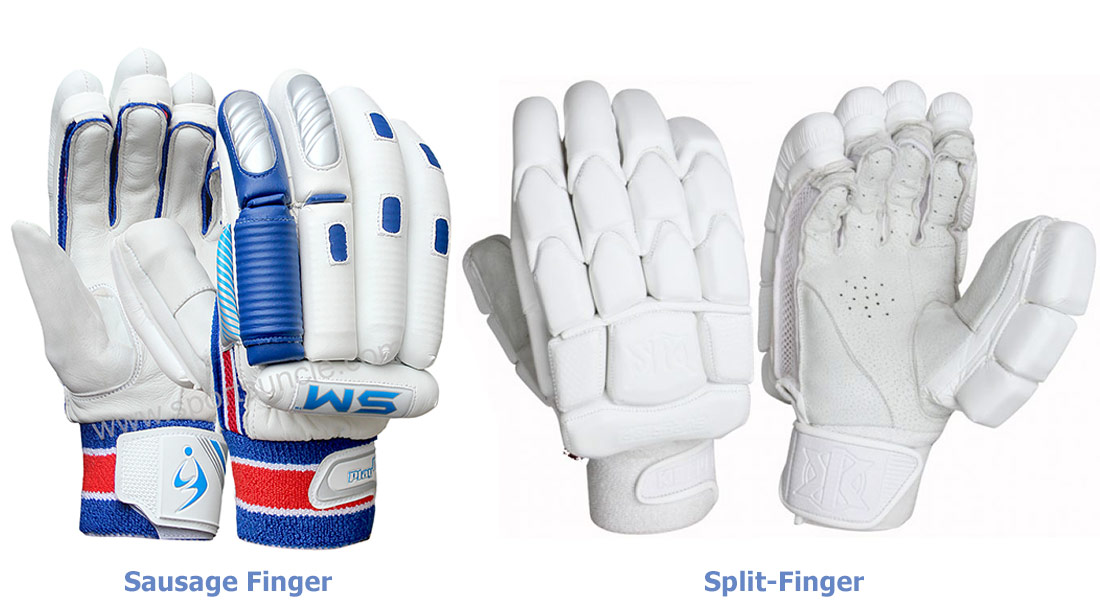
Usually, vendors sell two different types of batting gloves: Sausage finger & Split-finger.
Batsmen who favor using their wrists while playing shots typically use split-finger gloves. In other words, Split-finger gloves are perfect for wristy players as they provide a high range of flexibility and ease of movement while playing shots. The players from the Indian subcontinent usually prefer Split-finger gloves because they play on pitches with the help of spin bowlers. And to play spinners better, players have to use their wrists.
Sausage gloves are perfect for bouncy pitches or pitches where the ball bounces a little more, like in the Australian continent. Sausage gloves have an extra layer of protection for fingers since fingers are the more vulnerable part on bouncy pitches.
After following the above steps, the only thing left for you is how much you are willing to pay for gloves. Once you are done with that, you are ready to get yourself a new pair of batting gloves.
How to pick the right wicket-keeping gloves?
Keep the following things in mind before buying wicket-keeping gloves.
Sizing
Size is the first thing that you should check while buying wicket keeping gloves. Keep in mind that if a specific size of a particular brand fits you perfectly, it doesn’t mean the same size of another brand will fit you. Just like any other product, the size of wicket-keeping gloves varies by brand.
More often than not, people often fall prey to this misconception and choose a product based on its build material. And when they try the gloves, they are either small or big. Hence, we have prepared a table of glove sizes according to the age category based on wicket-keeping gloves from numerous brands.
| Category | WK Glove Size |
Small Boys | 16.5cm |
Boys | 17.5cm |
Youth | 19.0cm |
Small Men | 20.0cm |
Normal Men | 21.0cm |
Big Men | 22.5cm |
Just like batting gloves, measure the size from your wrist to the tip of your middle finger.
Once you know your size, you are ready to explore the world of wicket-keeping gloves.
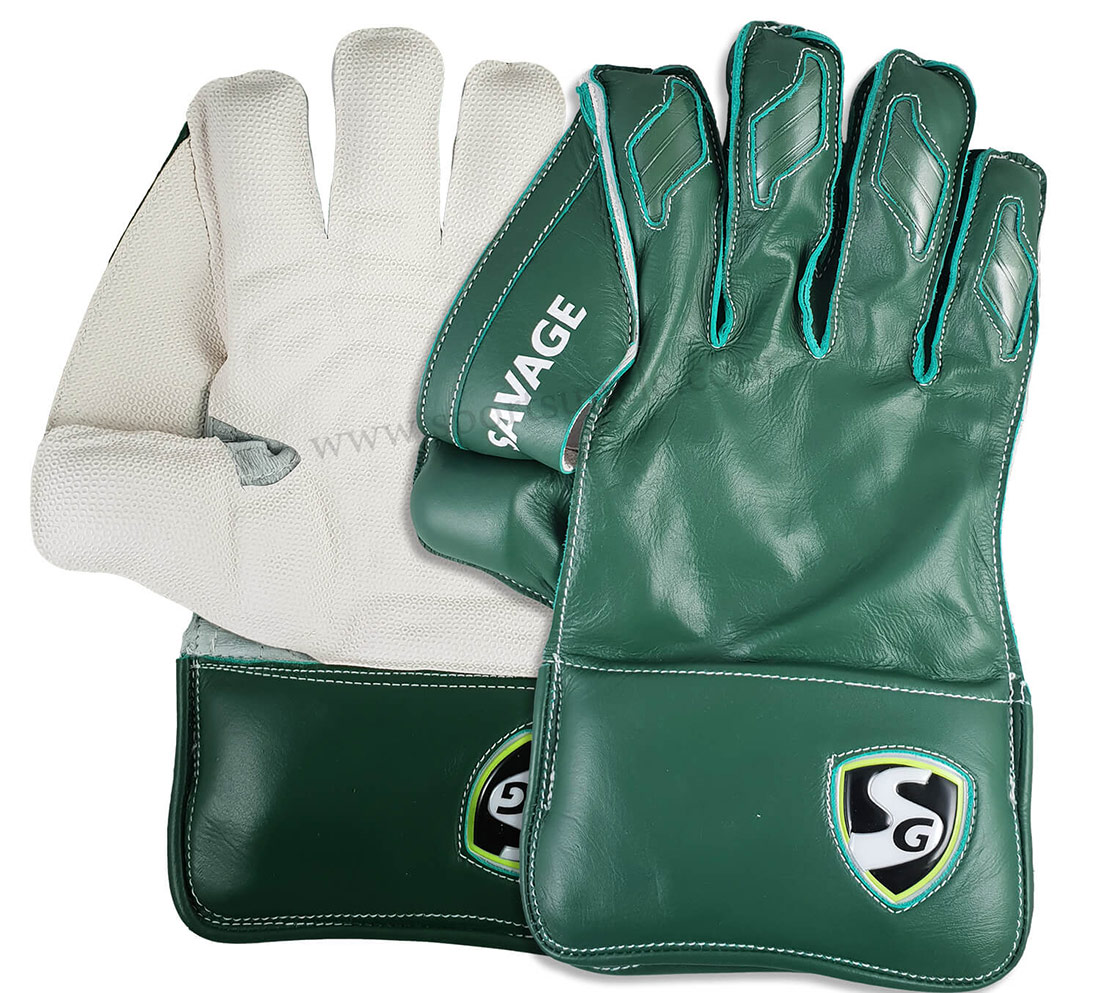
Choose a Wicket keeping Gloves Material
You will come across a variety of materials while buying wicket-keeping gloves. While high-quality materials will be softer, offering more flexibility, protection, and comfort, low-quality ones will make you susceptible to injuries.
Never compromise on the quality. Not only the quality impacts your ability to take catches, but it will be the difference between some light bruising and broken fingers.
You will notice that almost all varieties of the wicket keeping gloves are made with different kinds of leathers because leather gloves are generally durable and flexible. Plus, they offer much more strength and can be used much more rigorously.
That said, wicket keeping gloves are also made with cotton. So, before selecting specific leather or other material, you should understand what it offers. Check out the list given below to understand the fundamental properties of different materials.
- Gloves made with standard leather are comfortable and durable.
- Calf leather gloves offer exceptional comfort and feel, but they are not durable.
- Sheep leather gloves provide comfort and flexibility, but just like calf leather gloves, they are not very durable.
- Kangaroo leather is the strongest leather and is soft. Hence, it offers a perfect blend of comfort, flexibility, and durability.
- Rubber provides great elasticity and water-resistant property.
- Cotton gloves provide strength, and they are long-lasting.
Whether you want incredibly loose gloves or something tight, or do you want the flexibility of Australian-style gloves or ultra-protection of English gloves?
Choose accordingly, but as you move forward in your career, you will need softer, flexible, and more comfortable gloves.
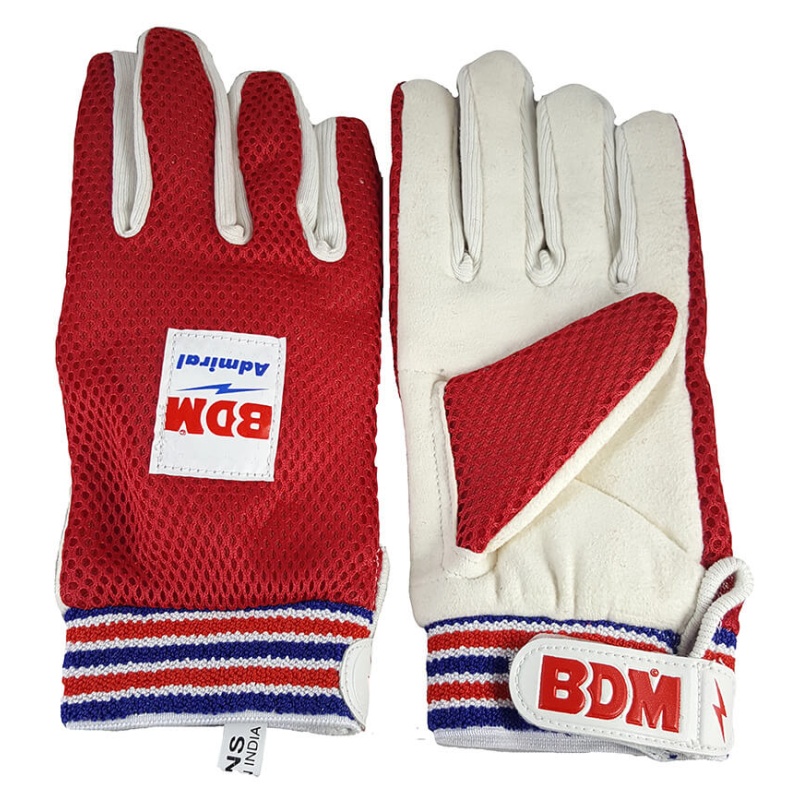
Further, use inners below the wicket-keeping gloves to add an extra layer of protection. Moreover, inners also provide comfort and absorb sweat. These inners are usually made up of cotton, but some extra padding is added to ensure protection.
These were the steps that will help you find the right pair of cricket gloves, both batting and keeping.
Now, you know the process of selecting the perfect cricket gloves. After buying comes the next part, which is maintaining your gloves. They will soon become an inseparable part of your life that you don’t wanna lose. Thus, it is necessary to take good care of your gloves to prevent tearing and wearing off.
So, what are the most appropriate steps to take good care of your cricket gloves so they can last longer? Let’s discuss them one by one.
How to take good care of your cricket gloves?
Taking good care of your cricketing equipment is of the utmost importance if you want them to last longer. Even the most noteworthy cricketers don’t enjoy changing their gear a lot because finding the perfect equipment is difficult. And for the same reason, you want your gloves to last longer.
Below are some steps that you can follow to increase the lifespan of both the batting as well as wicketkeeping gloves.
Buy superior-quality gloves
It all starts with purchasing high-quality batting gloves to ensure 100% original-quality products because the better the build material is used in making them, the longer they will last. It doesn’t matter whether you play at the national or state or the district level, you cannot compromise on the quality.
There are several kinds of gloves present in the market and vary only in the type of leather they use. Sometimes even cotton is used, but very rarely.
Always pack more than one pair of batting gloves
Professional batsmen like showing off their collection of batting gloves. Though we don’t get to their collection that much in one-day cricket, in test matches, they don’t shy away from flexing it, especially during a long knock. Someone like Steve Smith uses up to twelve pairs of batting gloves in a test match during a marathon knock.
Budding crickets wouldn’t stock a large number of gloves like international cricketers, but carrying spare pairs of gloves is handy, and the more the merry.
Swapping gloves in between games while leaving the used wet pair to dry is a strategy followed even by international cricketers. You can follow the same to prolong the life of your batting gloves.
Wear inner gloves with both batting and keeping gloves
It is almost impossible to overthink much about gloves while playing because we are fully involved in it. But, gloves are most susceptible while playing because players sweat a lot, and this sweat makes the gloves wet. Wet gloves result in diminished concentration, and moisture decreases the lifespan of the gloves.
Therefore, it is critical to wear another pair of gloves called inners under the main batting gloves. And it may be the only possible way to maintain your gloves during play.
Inners ensure that main batting gloves don’t get too wet by acting as insulation between the hands and the gloves. Hence, they promote better concentration, optimal performance, and an improved life span.
Ultimately, wearing inners under batting gloves is more of a personal choice. However, it is mandatory to use inner gloves with wicket keeping gloves. So, while keeping, the choice comes down to what type of inner gloves one should wear instead of whether or not one should wear inner gloves.
Avoid putting gloves directly into your kit after the game
It is critical not to put your gloves directly into the kit bag after the game because they can get soaked during the match, even after wearing inner. And if the wet gloves are placed directly into the kit, it can damage the leather of the gloves.
Moreover, you don’t want your gloves to become hard and uncomfortable to wear. Hence, place them in a warm environment and dry them before putting them into your kit bag.
Regular cleaning
Not only keeping your gloves dry is essential, but keeping them clean is also pivotal for a longer life span. The gloves can become a breeding ground for dirt that, when left unnoticed for an extended period, can create friction against the batting grip. Thus, cleaning them every week or two is necessary.
To clean your gloves, avoid using water- and oil-based cleansers, as they can adversely affect the leather. Use a dry leather brush to remove the dirt, or you can use a dry cloth to clean the outer visible dirt. And if you want to clean them thoroughly, use a leather cleanser and follow the manufacturer’s guidelines.
Batting is all about concentration, which can break even the slightest of discomfort. Maintaining your bat, preserving your gloves, and keeping your cricket shoes in the best shape are some things that will help you focus better on the ball while batting. In return, it will improve your overall game.

Viswanath M
Meet the maestro behind the cricketing quill – a wordsmith whose ink flows with the rhythm of a perfectly timed cover drive. When the cricket ball rests, my pen takes the spotlight, transforming every match, every player, into a poetic symphony of leather against willow. With a laptop as my crease and words as my bouncers, I bowl over readers with stories that swing and spin.
Related Products
-20%
₹3,049 ₹2,440
-26%

₹2,755 ₹2,045
-15%

₹4,199 ₹3,565
-18%
₹6,199 ₹5,085
Leave a Reply
Your email address cannot be published. Required fields are marked*
Latest Articles from Blog
07.09.2026
23.08.2026
No comments